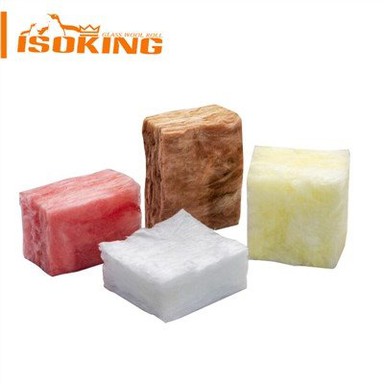
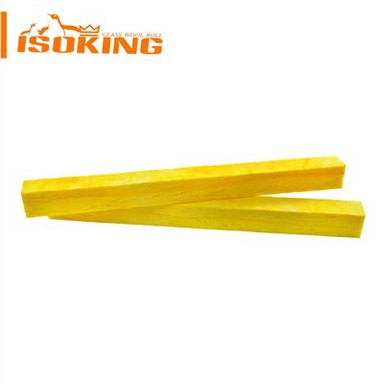
Distributor Glasswool
Length: 5-30m
Width: 0.4-1.2m
Density: 10-50kg/m3
Thickness: 25-200mm
Facing: None, FSK, Kraft, BGT (Black Glass Tissue)
- Fast Delievery
- Quality Assurance
- 24/7 Customer Service
Product Introduction
Compression test
Purpose
Compression testing measures the ability of glass wool to resist deformation under load. This test is essential to understanding how the material performs under various compressive forces, such as those encountered during installation, transportation, and service.
Procedure
1. Sample preparation: Prepare glass wool samples according to standard dimensions and conditions.
2. Loading: Place the sample into the compression tester. A uniform load is applied to the sample at a controlled rate.
3. Measurement: As the load is increased, the deformation (compression) of the sample is recorded. The test is continued until the specified load is reached or the sample fails.


Key Specifications
Compressive Strength: The maximum compressive load that the glass wool can withstand before it deforms or breaks noticeably.
Compression Modulus: The ratio of compressive stress to the corresponding strain, an indication of the stiffness of the material.
Significance
Durability: High compressive strength ensures that the glass wool maintains its structural integrity under mechanical stress, preventing damage during handling and installation.
Performance: Sufficient compressive strength ensures that the glass wool maintains its insulating properties, as excessive compression reduces the thickness and density of the material, thereby reducing its effectiveness.
How to identify the purity of glass wool
Glass wool, a type of fiber glass, is widely used for insulation in buildings and industrial applications due to its excellent thermal and acoustic properties. Ensuring the purity of glass wool is crucial for its performance and safety. Impurities can compromise its effectiveness, increase health risks, and reduce its lifespan. Here are the key methods to identify the purity of glass wool:
1. Visual Inspection
Color and Texture
- Pure glass wool: Typically has a uniform color, usually yellow or white.
- Impurities: Discoloration, such as dark spots or inconsistent color patches, can indicate the presence of contaminants.
Fiber Consistency
- Pure glass wool: Consists of evenly distributed, fine fibers.
- Impurities: Presence of clumps, lumps, or inconsistent fiber thickness may suggest impurities.
2. Chemical Analysis
Composition Testing
Conduct a detailed chemical composition analysis using techniques like X-ray fluorescence (XRF) or inductively coupled plasma (ICP) spectroscopy.
- Pure glass wool: Primarily composed of silica (SiO2), along with other oxides like aluminum oxide (Al2O3), calcium oxide (CaO), and boron oxide (B2O3).
- Impurities: Detecting elements not typically part of glass wool's composition (e.g., heavy metals, organic compounds) indicates contamination.
pH Testing
Dissolve a small sample in deionized water and measure the pH.
- Pure glass wool: Usually shows a neutral to slightly alkaline pH (around 7-8).
- Impurities: Significant deviation from this range suggests contamination.

3. Physical Testing
Density Measurement
Measure the density of the glass wool.
- Pure glass wool: Has a specific density range depending on its intended use.
- Impurities: Abnormal density can indicate the presence of foreign materials.
Thermal Conductivity
Test the thermal conductivity using a heat flow meter.
- Pure glass wool: Exhibits consistent thermal resistance values.
- Impurities: Variations in thermal resistance can point to impurities affecting the material's insulation properties.
4. Microscopic Examination
Fiber Analysis
Examine the glass wool fibers under a microscope.
- Pure glass wool: Should show uniform, smooth fibers.
- Impurities: Irregularities in fiber shape, size, or the presence of foreign particles indicate impurities.
5. Spectroscopic Analysis
Infrared Spectroscopy (FTIR)
Use Fourier-transform infrared (FTIR) spectroscopy to identify organic contaminants.
- Pure glass wool: Shows characteristic absorption peaks corresponding to its chemical composition.
- Impurities: Additional peaks can indicate the presence of organic contaminants or additives.
Raman Spectroscopy
Raman spectroscopy can provide information about the molecular structure.
- Pure glass wool: Exhibits specific Raman peaks for silica and other components.
- Impurities: Deviations from the expected Raman spectrum suggest contamination.

6. Professional Laboratory Testing
For the most accurate assessment, consider sending samples to a professional laboratory equipped with advanced analytical tools. Labs can provide comprehensive reports on the composition, purity, and quality of the glass wool.
Storage conditions of glass wool
Glass wool, also known as fiberglass insulation, requires specific storage conditions to maintain its effectiveness and safety. Here are the recommended storage conditions for glass wool:
- Dry Environment: Glass wool should be stored in a dry place to prevent moisture absorption. Moisture can reduce its insulating properties and cause mold or mildew growth.
- Indoor Storage: Ideally, store glass wool indoors to protect it from weather elements. If indoor storage is not possible, ensure it is covered with waterproof sheeting to shield it from rain and humidity.
- Flat and Stable Surface: Store glass wool on a flat, stable surface to prevent deformation or damage. Avoid placing heavy objects on top of the insulation material.
- Ventilation: Ensure proper ventilation in the storage area to avoid the buildup of moisture and to maintain air quality.
- Away from Chemicals: Keep glass wool away from chemicals or substances that could cause contamination or degradation of the material.
- Temperature Control: Store glass wool in a temperature-controlled environment, avoiding extreme temperatures that might affect its structural integrity.
- Avoid Compression: Do not compress glass wool during storage, as this can reduce its insulating efficiency by affecting its thickness and density.
By adhering to these storage conditions, you can ensure that glass wool remains in good condition and retains its insulating properties.

The structure of glass wool
The insulating qualities of glass wool, commonly referred to as fiberglass insulation, are a result of its distinctive structure. Glass wool is made up of the following essential elements:
Glass fibers:
Glass wool is formed of fine glass fibers, which are usually silica (SiO₂) and various oxides such as calcium oxide (CaO), magnesium oxide (MgO), and alumina (Al2O₃).
Production: Glass is melted, then spun or blown into tiny strands to create these fibers. These fibers typically have a diameter of 2 to 10 micrometers.
Fiber Layout:
Random Orientation: The interwoven, random pattern of glass fibers makes up glass wool. The material develops a huge number of microscopic air pockets as a result of this random orientation.
Interlocking: This improves the material's ability to retain heat by allowing the fibers to be loosely linked to one another.

Organizer:
Goal: A binder is frequently employed to maintain the material's structural integrity and hold the glass fibers together.
Types: Phenol-formaldehyde resins are used to make traditional binders, but there are also more recent, ecologically friendly binders made of bio-based ingredients.
Application: During the production process, the binder is sprayed over the fibers and allowed to cure, creating a sturdy mat or batt.
Air Holdings:
Insulating Property: The many microscopic air pockets that are caught in between the glass strands are what give glass wool its insulating qualities. These pockets lessen the amount of heat that passes through the material since air is a poor heat conductor.
Sound Absorption: By scattering sound waves, the air pockets in glass wool also aid in the material's ability to absorb sound.

Surface Coating:
Coatings: Glass wool's surface may occasionally be treated or coated with substances to enhance particular qualities like fire resistance or water repellency.
Glass wool products can also be coated with foil, plastic films, or kraft paper to aid handling and installation, increase moisture resistance, or serve as a vapor barrier.
Variations in Density and Thickness:
Customization: Glass wool's thickness and density can be changed during production to accommodate various uses. Lower density goods are more effective for thermal insulation, whereas higher density products are better for mechanical strength and sound insulation.
The main technical indicators of glass wool
Glass wool, or fiberglass insulation, is evaluated based on several technical indicators that determine its suitability for various applications.
Density:
Definition: Density is the mass per unit volume of the material.
Typical Values: The density of glass wool ranges from 10 to 100 kg/m³, depending on the specific product and application.
Significance: Higher density can improve sound absorption and mechanical strength but may affect thermal insulation efficiency.
R-Value:
Definition: The R-value measures the thermal resistance of the material.
Typical Values: R-values for glass wool vary widely, typically ranging from R-2.5 to R-4.0 per inch of thickness.
Significance: Higher R-values indicate better insulation performance.
Thickness:
Definition: Thickness is the distance between the two faces of the material.
Typical Values: Glass wool insulation is available in various thicknesses, commonly from 25 mm to 200 mm.
Significance: Thicker insulation generally provides better thermal resistance.
Water Absorption:
Definition: Water absorption indicates the amount of water the material can absorb when exposed to moisture.
Typical Values: Glass wool has low water absorption, typically less than 1 kg/m².
Significance: Low water absorption helps maintain insulation performance in humid conditions.
Compressive Strength:
Definition: Compressive strength is the ability of the material to withstand compressive forces.
Typical Values: Glass wool's compressive strength varies, with higher-density products offering greater strength.
Significance: Adequate compressive strength ensures the material maintains its shape and insulating properties under load.
Dimensional Stability:
Definition: Dimensional stability refers to the material's ability to retain its dimensions under varying temperature and humidity conditions.
Significance: Good dimensional stability ensures long-term performance without significant shrinkage or expansion.
Certifications