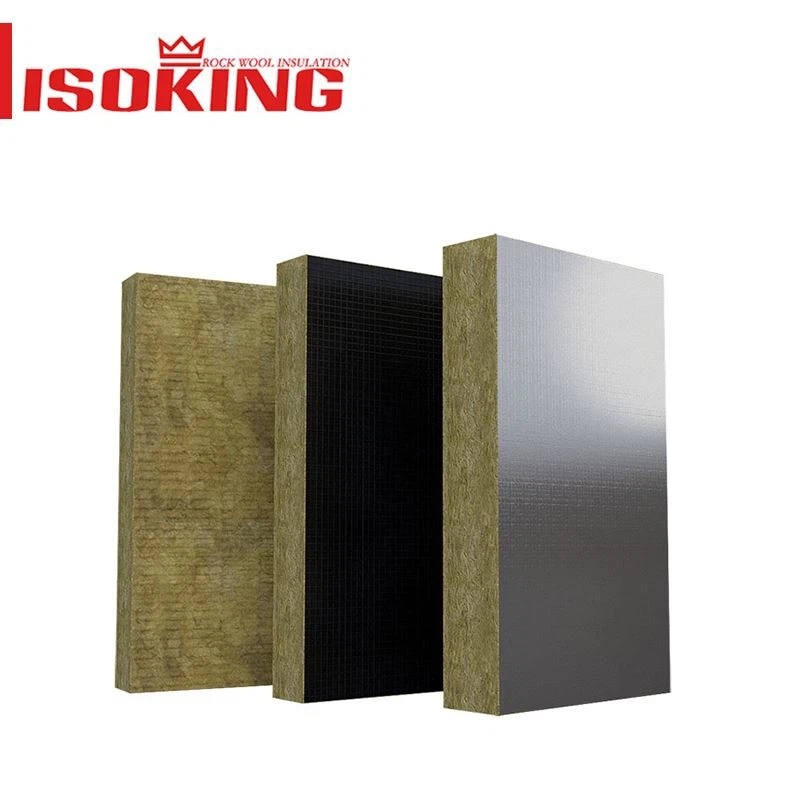
External Wall Insulation
Width: 600mm
Length: 1200mm
Thickness: 30mm-150mm
Density: 50kg/m3-200kg/m3
- Fast Delievery
- Quality Assurance
- 24/7 Customer Service
Product Introduction

about External Wall Insulation
With its A-level non-combustible fireproof insulation material, high compressive and tensile strength, low water and moisture absorption, good dimensional stability, no thermal expansion or contraction, aging resistance, and other benefits, this unique rock wool insulation board for external walls is compatible with the external wall system and offers buildings effective insulation, energy savings, fire prevention, and extreme climate protection.
In order to improve the fire protection function of the building's external wall, the rock wool insulation board is specifically made for the external wall insulation thin plaster system. It can be used for external wall insulation or energy-saving renovation of new or existing buildings with dense structures like concrete or brick walls. Additionally, the rock wool belt can be used as a fire isolation belt when combined with insulation materials whose combustion performance does not reach A level.
By retaining heat, this layer of insulation lowers heating and cooling expenses by making the structure warmer in the winter and cooler in the summer.
Key Components of External Wall Insulation
Insulation: Common materials include mineral wool, EPS or XPS. For example, mineral wool provides excellent fire and sound insulation properties, while EPS and XPS provide effective thermal insulation.
Adhesives and Fixings: Specialized adhesives are used to bond the insulation panels to the wall, and mechanical fixings are used to hold the panels in place.
Reinforcement: Mesh reinforcements (usually fiberglass) are embedded in the primer to increase structural stability and impact resistance.
Finish: The final render or cladding protects the insulation from weathering, increases durability and gives it a polished appearance. Available in a variety of textures and colors for aesthetic flexibility.
Benefits of Exterior External Wall Insulation
Improves energy efficiency by lowering heat loss, which lowers utility costs by requiring less energy for heating and cooling.
Improved comfort: Assists in controlling the temperature inside, making it more cozy all year long.
Reduces mold and condensation: Insulation keeps walls from being too cold, which lowers the chance of internal mold growth and condensation.
Boosts property value: Enhances a property's overall appearance and energy efficiency, raising its market value.
Soundproofing: Insulation is perfect for homes in loud areas because it also lowers outside noise.
Application process of External Wall Insulation

Wall preparation
Cleans the exterior wall surface in preparation for insulation. Addresses cracks and any structural issues.

Insulation board installation
Insulation boards are attached to the wall using adhesives and mechanical fasteners.

Reinforcement and coating
A web-reinforced primer is applied to increase the stability and durability of the system.

Finish layer
A final render or coating is applied to create a weatherproof and visually appealing surface.
Precautions for the construction of External Wall Insulation
Base treatment: The base wall must adhere to the applicable quality acceptance standards. In cooperation with the appropriate departments, the structural acceptability should be verified prior to the insulation construction. The base wall should be leveled with mortar if the deviation is too great.
Conditions for construction: The temperature should be higher than 5°C and the wind speed should not be higher than level 4. On rainy days, construction is prohibited, and precautions should be made. It is necessary to sweep the wall, clear any oil stains, and remove any floating dust.
Laying rock wool board: Determine the positioning line of the rock wool board, lay the rock wool board, drill holes in the anchor installation position according to the construction drawing, knock in the nylon sleeve with a disc, and press the rock wool board. At least 3 anchors are set per square meter on the wall, and at least 2 anchors are set on each rock wool board.
Laying wire mesh: While laying the rock wool board, lay the wire mesh and fix it with anchors or low-carbon steel wire. Repair all joints and flatten the protruding parts of the wire mesh with staples.
Interface layer construction: After the insulation layer is installed and passed the inspection, the interface layer can be constructed. Place the plastic gasket under the wire mesh and raise the wire mesh by 5mm. Then use a special spray gun to evenly spray the prepared interface mortar onto the surface of the rock wool board and the wire mesh.
Anti-cracking layer construction: The length of the alkali-resistant mesh cloth is not more than 3m, and the size is cut in advance. When applying the anti-cracking mortar, the thickness should be controlled at 3~4mm. After applying the anti-cracking mortar with a width and length equivalent to the mesh cloth, it should be immediately pressed into the alkali-resistant mesh cloth with an iron trowel in the order from left to right and from top to bottom.